|
The Korean peninsula is 1000 km long and 175 km wide. It is
divided at the 38th parallel into the Democratic Republic of
Korea in the south and communist North Korea. One fourth of
Korea's 48 million people live in Seoul, the hub of politics,
economics and culture. (Gael
Chardon, Wikimedia Commons)
|
|
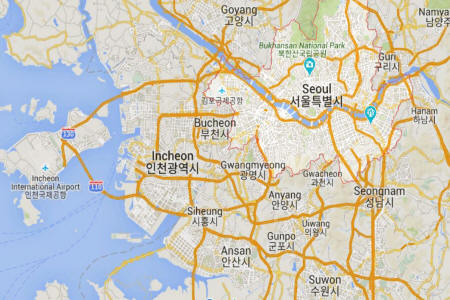
Situated on the Han River, the history of Seoul
goes back 2000 years. The 24 neighborhoods of
Seoul each have a unique flavor, with combinations of
skyscrapers, royal palaces, temples, night markets and shops.
|

Gangnam is the busy economic centre. Korean
corporations include Hyundai and Kia motors, Samsung and LG
electronics and household goods, and FILA athletic wear. |
|

Seoul
has 5 Grand Palaces built by the Joseon Dynasty. The largest is
Gyeongbokgung complex with 330 buildings and 5800 rooms.
(photo courtesy of Korea.net/Korea Culture and Information
Service)
|
%20military%20museum.jpg)
Seoul has 10
major museums including the National Museum, the Leeum Museum or
Art and the War Memorial of Korea pictured here. |
|

The hop-on
hop-off tour bus was an excellent way to get an overview of the city
and to identify landmarks.
|
.jpg)
Namsam Peak
is the highest point. It features a large garden and the Nansam
telecommunications and observation Tower.
(Jessica
Gardner, Wikimedia Commons) |
|

Night markets, like this
one at Namdaemon are the centre of night life with kiosks
selling everything imaginable and street barbeques creating
delectable meals. |

Large
suburban areas such as Itaewon-dong and Ichon feature high-rise
apartment complexes and central built up areas of offices,
restaurants and public gardens.
|
|

Throughout the city various restaurants display
their specialties including kimchi, bulgogi, and rice cakes.
|

Insa-dong is the traditional heart of Seoul with numerous tea
houses and antique and art galleries. At a tiny family-run tea house
we sat on the floor and ate an inexpensive sumptuous meal.
|
|

Carol was in
Korea with fellow educators from Calgary to learn about the
educational system. The Seoul Metropolitan Board of Education
was a wonderful host escorting us to a variety of school
settings such as this Kindergarten class.
|

We visited
classrooms, were presented with cultural performances, and
joined staff and students for lunch to chat in English. |
Ornate
gateways, pretty gardens and fountains, temples and shrines in
traditional styles are delightfully interspersed within modern
developments.
|
|

A
fascinating side trip was to the DMZ (Demilitarized Zone).
We were guests of the United Nations and escorted
by the American military. The two mile wide
region is a unique political and ecological zone.
|

The demilitarized zone (DMZ) marks the 155 mile
cease-fire line ending the Korean War. The heavily guarded
premises of Panmunjeom are located in the middle of the
demilitarized zone (DMZ) and remain reserved strictly for
political engagements. |
|

Unification Park and other museums provide
information about reunification efforts.
|

The Dora Observatory is the only place in South
Korea where visitors can catch glimpses of North Korea. |